
 What Is SEO?
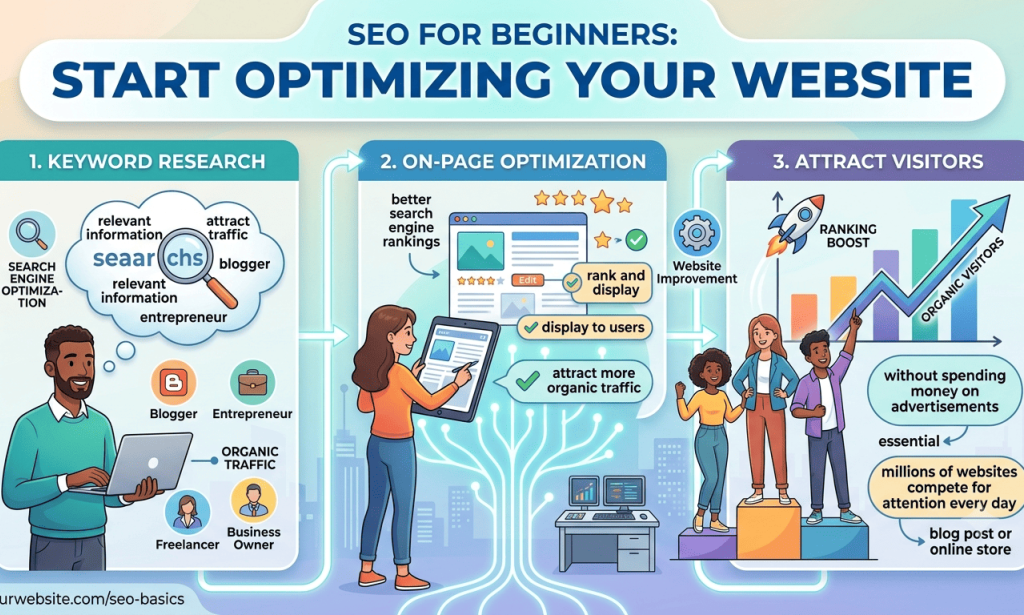
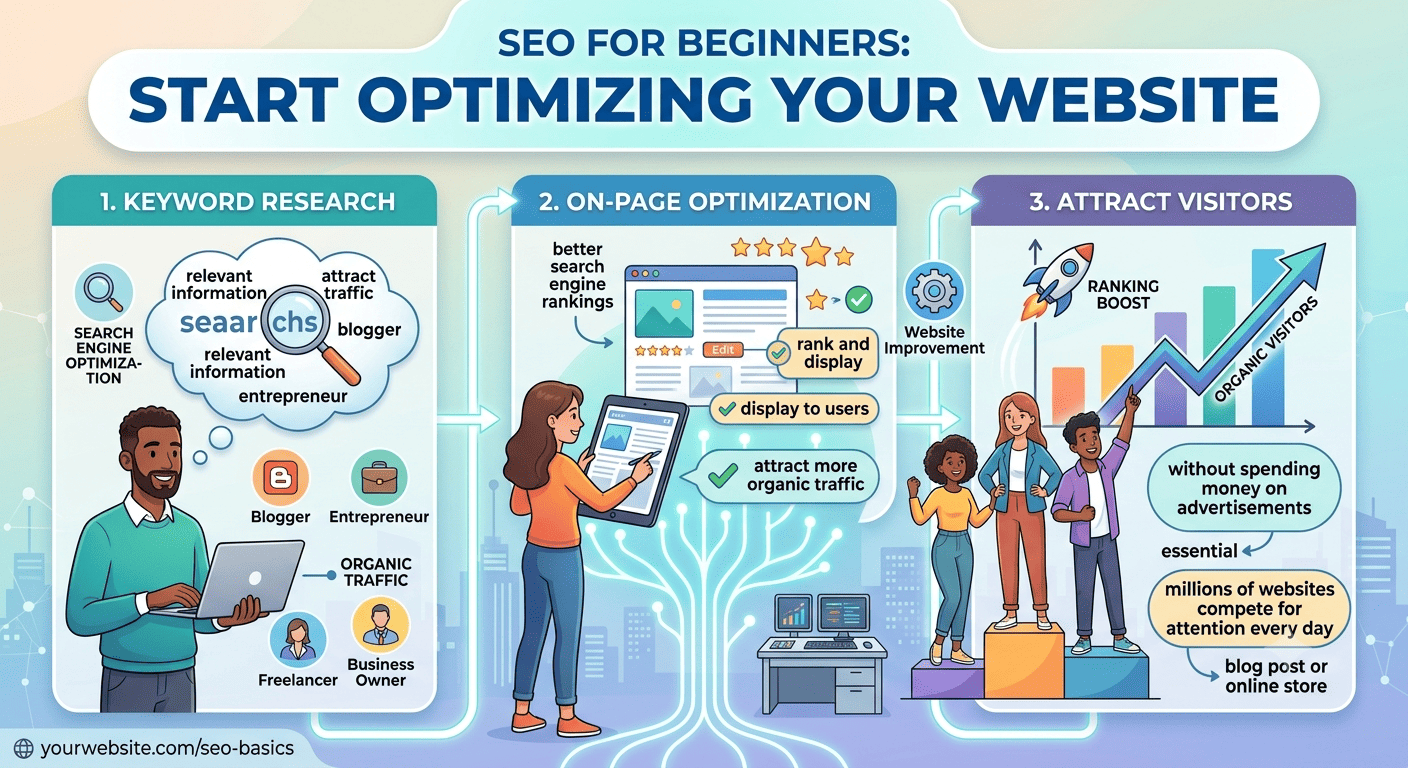
Search Engine Optimization (SEO) is the practice of improving your website's visibility in search engine results. When users search for information online, search engines display the most relevant and valuable content based on various ranking factors.
The goal of SEO is to help your website appear higher in search results, increasing the chances of receiving organic (free) traffic.
SEO involves several key areas, including:
- Keyword research
- On-page SEO
- Technical SEO
- Content optimization
- Link building
- User experience optimization
Why Is SEO Important?
SEO offers numerous benefits for businesses and website owners, such as:
- Increased website traffic
- Higher search engine rankings
- Better brand visibility
- Improved user experience
- More leads and conversions
- Long-term marketing benefits
- Cost-effective traffic generation
Unlike paid advertising, SEO can continue delivering traffic over time when implemented effectively.
How Search Engines Work
Search engines generally follow three steps:
- Crawling – Discovering web pages across the internet.
- Indexing – Organizing and storing information about those pages.
- Ranking – Displaying the most relevant results for a user's search query.
Search engines aim to provide users with the most useful and trustworthy content possible.
Keyword Research
Keywords are the words and phrases that users type into search engines.
Examples include:
- Best laptops for students
- Healthy breakfast ideas
- Digital marketing tips
- How to start a blog
Choosing the right keywords is one of the most important parts of SEO.
When researching keywords, consider:
- Search volume
- Competition level
- User intent
- Relevance to your content
Long-tail keywords are often easier to rank for and can attract highly targeted visitors.
On-Page SEO
On-page SEO refers to optimizing the content and elements on your website.
Important factors include:
- Title tags
- Meta descriptions
- Headings (H1, H2, H3)
- Keyword placement
- Internal linking
- Image optimization
- URL structure
Well-organized content improves both search engine rankings and user experience.
Create High-Quality Content
Content remains one of the most important ranking factors in SEO.
Your content should be:
- Helpful
- Accurate
- Easy to read
- Original
- Relevant
- Updated regularly
Focus on answering users' questions and solving their problems rather than simply inserting keywords throughout your articles.
High-quality content encourages visitors to spend more time on your website and increases the likelihood of earning backlinks.
Technical SEO Basics
Technical SEO helps search engines access and understand your website.
Some important technical SEO factors include:
- Fast page loading speed
- Mobile-friendly design
- Secure HTTPS connection
- Proper website structure
- XML sitemap
- Clean URLs
- Fixing broken links
Technical improvements can significantly impact both rankings and user satisfaction.
Optimize Images
Images should also be optimized for SEO.
Best practices include:
- Using descriptive file names
- Compressing images for faster loading
- Adding alt text
- Choosing appropriate image sizes
Optimized images can improve page performance and increase visibility in image search results.
Build Quality Backlinks
Backlinks are links from other websites pointing to your content.
Search engines often consider backlinks as indicators of credibility and authority.
Ways to earn backlinks include:
- Publishing valuable content
- Guest posting
- Creating shareable resources
- Networking with other website owners
- Producing original research or guides
Quality matters more than quantity when building backlinks.
Improve User Experience
SEO is closely connected to user experience.
Consider the following:
- Easy navigation
- Mobile responsiveness
- Readable content layout
- Fast-loading pages
- Clear call-to-action buttons
A positive user experience can improve engagement and reduce bounce rates.
Common SEO Mistakes Beginners Make
Avoid these common mistakes:
- Keyword stuffing
- Copying content from other websites
- Ignoring mobile optimization
- Publishing low-quality articles
- Neglecting technical SEO
- Using misleading titles
- Forgetting internal links
SEO is most effective when you prioritize both search engines and human readers.
Essential SEO Tips for Beginners
If you're just starting, follow these simple steps:
- Research relevant keywords.
- Create valuable content consistently.
- Optimize your titles and headings.
- Improve website speed and mobile usability.
- Build internal links between articles.
- Earn quality backlinks naturally.
- Monitor your website's performance regularly.
SEO is a long-term strategy, and results may take time. Consistency is the key to success.
Final Thoughts
Search Engine Optimization may seem complex at first, but mastering the fundamentals can significantly improve your online presence. By understanding how search engines work and focusing on high-quality content, technical improvements, and user experience, beginners can build a strong foundation for long-term success.
Remember that SEO is not about tricking search engines—it's about creating valuable content that genuinely helps users. As your website grows, investing time in SEO can lead to increased visibility, higher traffic, and greater business opportunities.
Start small, stay consistent, and continuously learn as search engine algorithms evolve. The sooner you begin optimizing your website, the sooner you'll see the benefits of organic growth.

You must be logged in to post a comment.