
 What Is a Remote and Hybrid Team?
A remote team consists of employees who work entirely outside a traditional office environment. They may work from home or different locations worldwide.
A hybrid team combines both in-office and remote employees. Some team members may work from the office several days a week, while others work remotely full-time.
Both models offer flexibility, but they require thoughtful leadership to maintain productivity and team culture.
Challenges of Managing Remote and Hybrid Teams
Remote and hybrid workplaces often face several challenges, including:
- Communication gaps
- Reduced team engagement
- Difficulty building company culture
- Time zone differences
- Employee isolation and burnout
- Tracking productivity without micromanaging
- Maintaining collaboration among team members
Understanding these challenges allows leaders to develop effective solutions before they impact business performance.
Leadership Strategies for Success
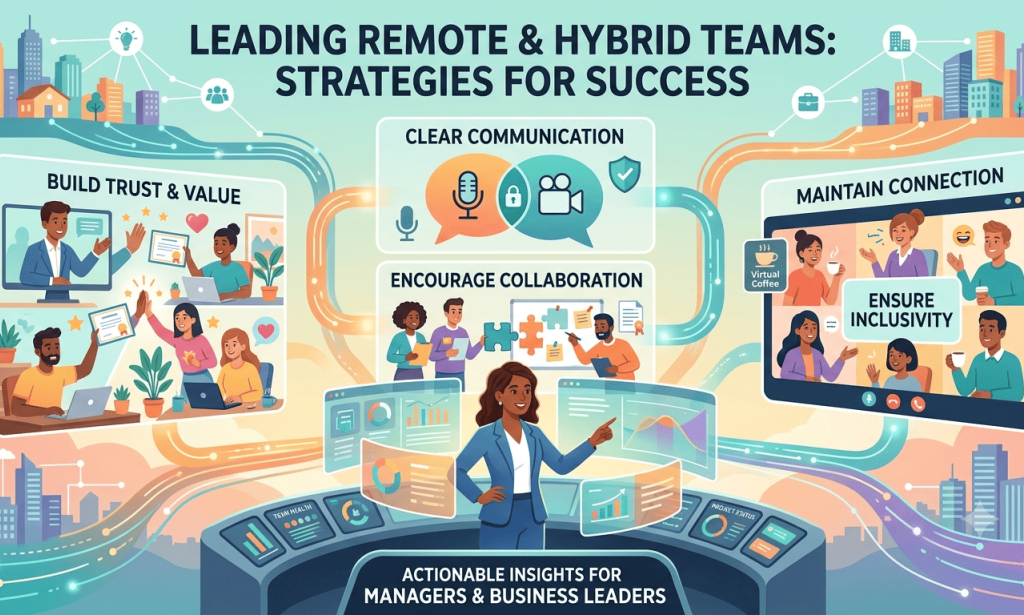
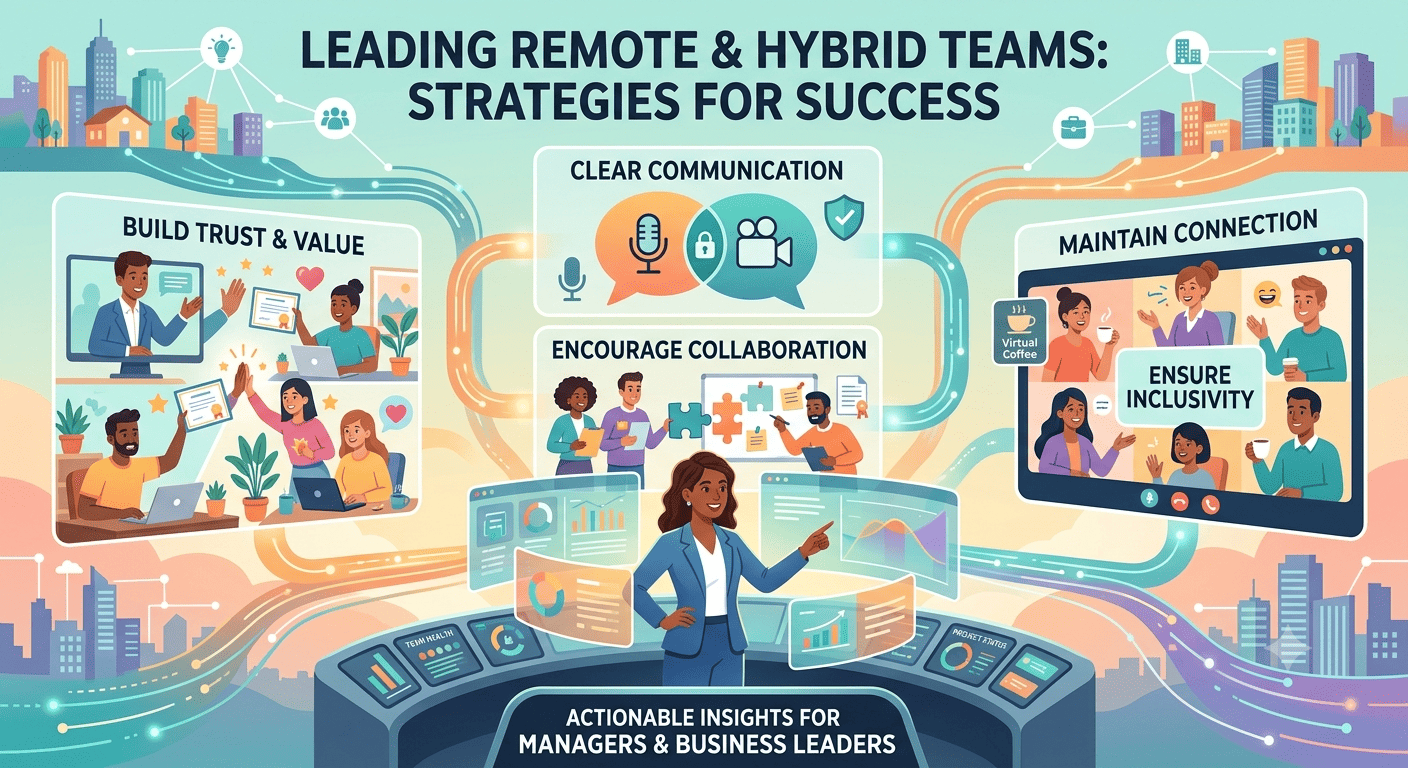
1. Prioritize Clear Communication
Communication is the foundation of successful remote leadership. Leaders should establish clear expectations regarding:
- Working hours
- Project deadlines
- Team meetings
- Communication channels
- Performance goals
Regular check-ins help employees stay aligned with company objectives and prevent misunderstandings.
2. Build Trust Instead of Micromanaging
Remote employees perform best when they are trusted. Constant monitoring often decreases motivation and productivity.
Great leaders focus on:
- Results
- Accountability
- Ownership of tasks
Rather than tracking every minute of an employee's day, focus on whether goals are being achieved.
3. Create a Strong Team Culture
Team culture should not disappear simply because employees work remotely.
Leaders can strengthen company culture by:
- Hosting virtual team-building activities
- Celebrating achievements publicly
- Encouraging informal conversations
- Recognizing employee contributions
- Promoting inclusivity among remote and office workers
Employees who feel connected are more likely to remain engaged and productive.
4. Use the Right Collaboration Tools
Technology plays a critical role in remote work success.
Businesses should invest in tools for:
- Video meetings
- Project management
- Team messaging
- File sharing
- Task tracking
The right tools improve collaboration and reduce confusion across teams.
5. Focus on Outcomes, Not Hours Worked
Remote work has changed how productivity should be measured.
Instead of asking:
"How many hours did employees work?"
Ask:
"What results did they deliver?"
Performance should be evaluated based on:
- Quality of work
- Meeting deadlines
- Problem-solving abilities
- Team collaboration
- Goal achievement
Outcome-based leadership promotes both flexibility and accountability.
6. Encourage Employee Well-Being
Remote employees are often at greater risk of burnout because work and personal life can easily overlap.
Leaders should encourage:
- Regular breaks
- Healthy work-life balance
- Flexible schedules when possible
- Mental wellness initiatives
- Reasonable workloads
Supporting employee well-being leads to higher productivity and better retention rates.
7. Conduct Regular One-on-One Meetings
Individual meetings help leaders understand:
- Employee challenges
- Career goals
- Motivation levels
- Workload concerns
- Professional development needs
One-on-one conversations build stronger relationships and create opportunities for meaningful feedback.
8. Promote Transparency
Transparency creates trust within remote teams.
Leaders should openly communicate:
- Company goals
- Organizational changes
- Project updates
- Expectations
- Business challenges when appropriate
Employees are more engaged when they understand how their work contributes to the company's success.
9. Support Continuous Learning
Remote work environments evolve rapidly. Leaders should encourage employees to improve their skills through:
- Online courses
- Workshops
- Training programs
- Industry certifications
- Knowledge-sharing sessions
Continuous learning benefits both employees and the organization.
10. Develop Inclusive Leadership Practices
Hybrid teams can unintentionally create inequality between remote and office-based employees.
Leaders should ensure:
- Equal access to opportunities
- Inclusive meetings
- Fair performance evaluations
- Equal participation in discussions
Every employee should feel equally valued regardless of where they work.
Common Leadership Mistakes to Avoid
Avoid these common mistakes when managing remote and hybrid teams:
- Micromanaging employees
- Holding unnecessary meetings
- Ignoring employee well-being
- Providing unclear expectations
- Overlooking remote employees during decision-making
- Failing to recognize achievements
- Relying solely on productivity monitoring tools
Strong leadership is built on communication, trust, and adaptability.
Final Thoughts
Remote and hybrid work models are reshaping the future of business. Leaders who embrace flexibility, prioritize communication, and focus on employee success will build stronger and more productive teams.
Managing remote and hybrid teams is not about controlling where people work—it is about empowering them to perform at their best. By building trust, encouraging collaboration, and supporting employee growth, businesses can create a thriving workplace regardless of physical location.
The most successful leaders are those who adapt to change and understand that great leadership is possible anywhere.

You must be logged in to post a comment.