

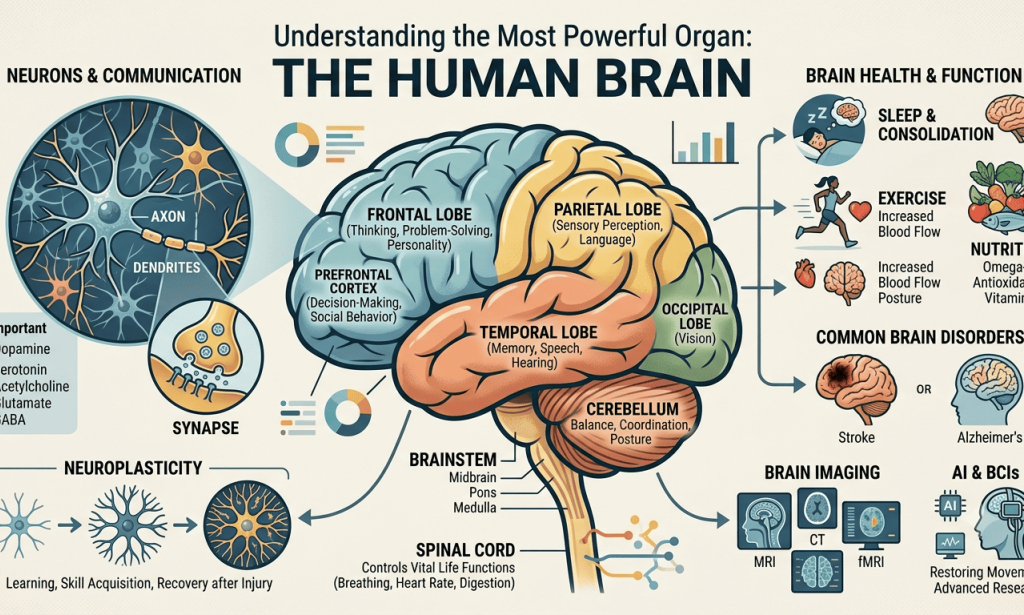

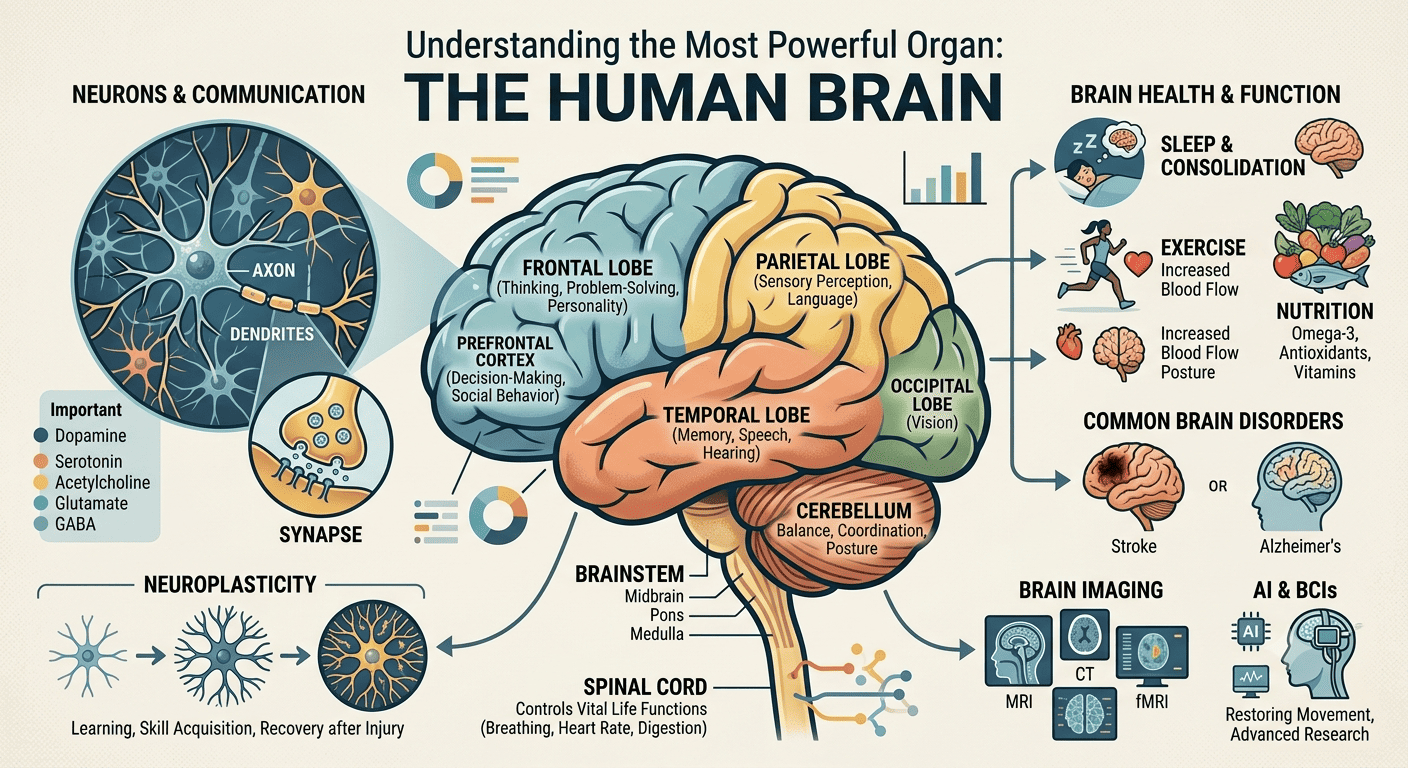
The Human Brain: Understanding the Most Powerful Organ in the Body
Introduction
The human brain is often described as the most extraordinary organ in the body. Weighing only about 1.3 to 1.4 kilograms, it controls nearly everything we do—from breathing and heartbeat to creativity, language, memory, and emotions. It is the center of intelligence, learning, and consciousness, enabling humans to solve problems, communicate, invent technologies, and build civilizations.
Scientists have spent centuries studying the brain, yet many of its mysteries remain unsolved. Advances in neuroscience and medical imaging have dramatically improved our understanding of how the brain functions, but researchers continue to discover new information every year. Understanding the brain is not only important for medicine but also for education, psychology, artificial intelligence, and human development.
This article explores the anatomy of the brain, its major functions, the role of neurons, brain health, neurological disorders, and the exciting future of brain science.
What Is the Human Brain?
The brain is the central organ of the nervous system. It receives information from the body's senses, processes that information, and sends signals that control movement, behavior, emotions, and vital bodily functions.
The brain works together with the spinal cord to form the central nervous system (CNS). Every thought, memory, movement, and feeling depends on the brain's ability to process electrical and chemical signals.
An adult human brain contains approximately 86 billion neurons, each connected through thousands of synapses. These connections create an incredibly complex communication network that enables learning and adaptation.
Major Parts of the Brain
The brain is divided into several main regions, each responsible for specific functions.
Cerebrum
The cerebrum is the largest part of the brain. It controls:
- Thinking
- Memory
- Language
- Voluntary movement
- Problem-solving
- Creativity
- Decision-making
It is divided into the left and right hemispheres, which communicate through a bundle of nerve fibers called the corpus callosum.
Cerebellum
Located at the back of the brain, the cerebellum is responsible for:
- Balance
- Coordination
- Posture
- Fine motor skills
Although smaller than the cerebrum, it contains more neurons than any other brain region.
Brainstem
The brainstem connects the brain to the spinal cord.
It controls essential life-support functions such as:
- Breathing
- Heart rate
- Blood pressure
- Swallowing
- Sleeping
- Digestion
Damage to the brainstem can be life-threatening because it regulates many automatic body processes.
How Neurons Work
Neurons are specialized cells that transmit information throughout the body.
Each neuron consists of:
- Cell body
- Dendrites
- Axon
- Synaptic terminals
Neurons communicate using electrical impulses and chemical messengers called neurotransmitters.
Important neurotransmitters include:
- Dopamine
- Serotonin
- Acetylcholine
- Glutamate
- GABA
These chemicals influence mood, learning, memory, movement, and behavior.
Memory and Learning
Memory is one of the brain's most remarkable abilities.
The brain creates memories through changes in neural connections known as synaptic plasticity.
There are different types of memory:
- Short-term memory
- Long-term memory
- Working memory
- Procedural memory
- Episodic memory
Learning strengthens neural pathways, making it easier to recall information over time.
Regular practice, repetition, and meaningful experiences improve memory formation.
Brain Plasticity
One of the most exciting discoveries in neuroscience is neuroplasticity.
Brain plasticity refers to the brain's ability to reorganize itself by forming new neural connections.
This allows people to:
- Learn new skills
- Recover after injuries
- Adapt to changing environments
- Improve cognitive performance
Neuroplasticity continues throughout life, although it is generally stronger during childhood.
Sleep and Brain Function
Sleep is essential for brain health.
During sleep, the brain:
- Consolidates memories
- Removes waste products
- Repairs cells
- Restores energy
- Regulates emotions
Chronic sleep deprivation can reduce concentration, impair memory, and increase the risk of several neurological conditions.
Adults generally benefit from 7 to 9 hours of quality sleep each night.
Nutrition and Brain Health
A healthy diet supports optimal brain function.
Important nutrients include:
- Omega-3 fatty acids
- Vitamin B complex
- Vitamin D
- Antioxidants
- Iron
- Zinc
- Magnesium
Foods that support brain health include:
- Fish
- Nuts
- Seeds
- Blueberries
- Leafy green vegetables
- Whole grains
- Eggs
Proper hydration is also essential for maintaining concentration and mental performance.
Exercise and the Brain
Physical activity benefits both the body and the brain.
Regular exercise:
- Improves blood flow
- Supports memory
- Enhances concentration
- Reduces stress
- Stimulates new neuron growth
- Lowers the risk of cognitive decline
Even moderate exercise such as walking can improve overall brain function.
Common Brain Disorders
Several neurological conditions affect millions of people worldwide.
These include:
- Alzheimer's disease
- Parkinson's disease
- Stroke
- Epilepsy
- Multiple sclerosis
- Brain tumors
- Migraine
Early diagnosis and medical treatment improve outcomes for many patients.
Scientists continue searching for better therapies through neurological research.
Brain Imaging Technology
Modern imaging technologies have revolutionized neuroscience.
Common techniques include:
- MRI (Magnetic Resonance Imaging)
- CT scans
- PET scans
- EEG
- Functional MRI (fMRI)
These tools allow researchers and doctors to observe brain activity, diagnose disorders, and study cognitive functions in remarkable detail.
Artificial Intelligence and Brain Research
Artificial intelligence is becoming an important tool in neuroscience.
AI helps researchers:
- Analyze brain scans
- Detect diseases earlier
- Predict treatment outcomes
- Study neurological disorders
- Process massive scientific datasets
The combination of AI and neuroscience is expected to accelerate medical discoveries in the coming years.
Brain-Computer Interfaces
Brain-computer interfaces (BCIs) are among the most exciting areas of scientific research.
These systems allow direct communication between the brain and computers.
Potential applications include:
- Restoring movement after paralysis
- Assisting communication for people with disabilities
- Controlling robotic limbs
- Advanced medical treatments
Although still developing, BCIs may transform healthcare in the future.
Keeping Your Brain Healthy
Maintaining brain health requires healthy daily habits.
Experts recommend:
- Eating nutritious foods
- Exercising regularly
- Sleeping well
- Staying mentally active
- Reading books
- Learning new skills
- Managing stress
- Avoiding smoking and excessive alcohol
Lifelong learning keeps the brain active and supports cognitive health as people age.
The Future of Neuroscience
Scientists continue making remarkable discoveries about the brain.
Future research may lead to:
- Better treatments for Alzheimer's disease
- Personalized brain therapies
- Improved mental health care
- Advanced brain implants
- Earlier disease detection
- Enhanced rehabilitation after brain injuries
These advances have the potential to improve millions of lives worldwide.

You must be logged in to post a comment.