
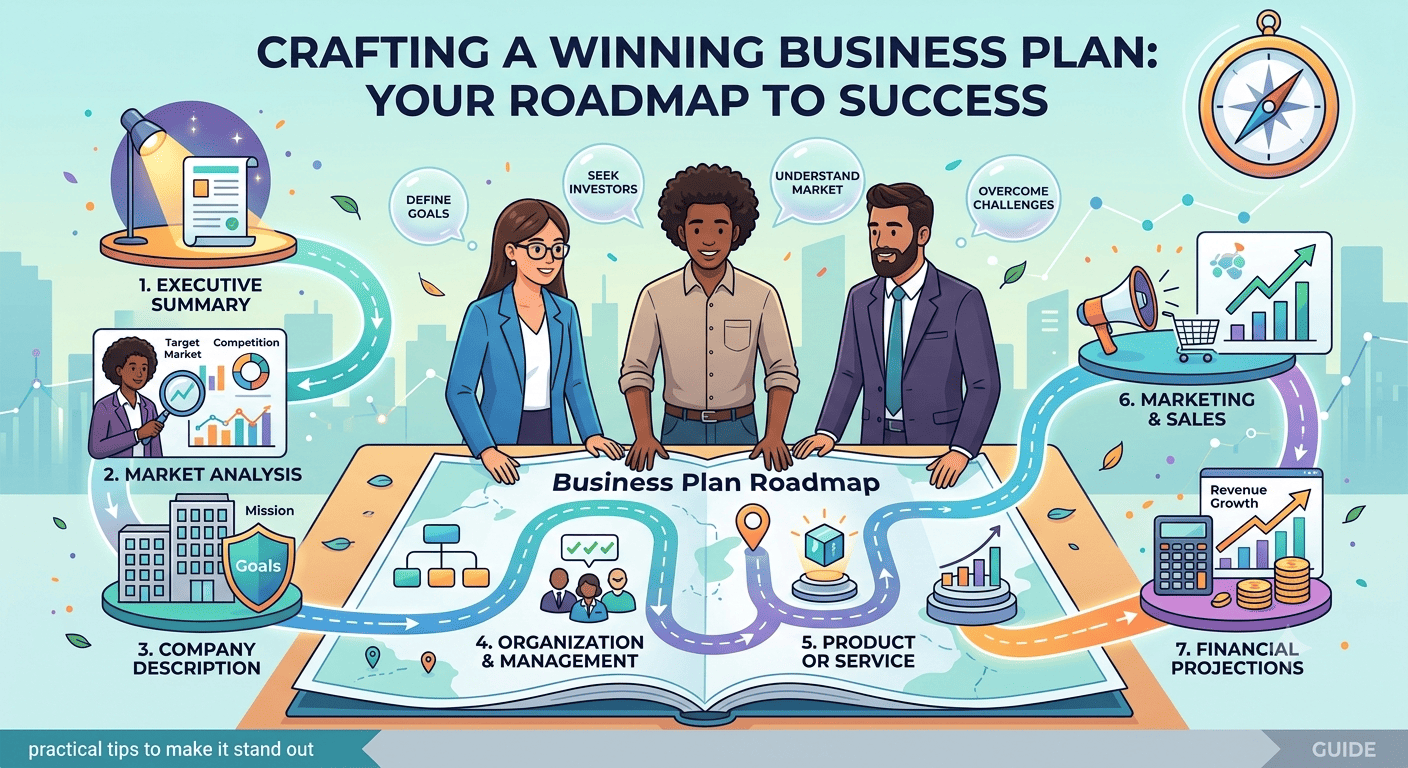
 What Is a Business Plan?
A business plan is a written document that outlines your business objectives, strategies, target market, financial projections, and operational plans. It acts as both a strategic guide for business owners and a valuable document for potential investors or lenders.
A strong business plan helps answer important questions such as:
- What problem does your business solve?
- Who are your target customers?
- How will your business generate revenue?
- What makes your business unique?
- What are your short-term and long-term goals?
Why Is a Business Plan Important?
Creating a business plan offers several benefits, including:
- Clarifying your business goals.
- Identifying potential risks and opportunities.
- Improving decision-making.
- Attracting investors and funding.
- Guiding business growth.
- Establishing financial and operational strategies.
Businesses with clear plans are often better prepared to adapt and succeed in competitive markets.
Start with an Executive Summary
The executive summary provides a brief overview of your business.
Include:
- Business name.
- Mission statement.
- Products or services.
- Target market.
- Business objectives.
- Financial goals.
Although it appears first in the document, many entrepreneurs prefer writing it after completing the rest of the business plan.
Describe Your Business
Provide detailed information about your company, including:
- What your business does.
- The industry you operate in.
- Your business model.
- The problems you aim to solve.
- Your competitive advantages.
This section should clearly explain why your business exists and what makes it valuable.
Conduct Market Research
Understanding your market is essential for success.
Analyze:
- Industry trends.
- Target audience demographics.
- Customer behavior.
- Competitor strengths and weaknesses.
- Market opportunities.
Good market research demonstrates that your business idea is realistic and well-informed.
Define Your Products or Services
Explain:
- What you sell.
- How it benefits customers.
- Pricing strategies.
- Product features.
- Future product development plans.
Investors and stakeholders want to understand the value your offerings provide.
Create a Marketing Strategy
Your marketing plan should explain how you will attract and retain customers.
Include:
- Branding strategies.
- Content marketing plans.
- Social media campaigns.
- Search engine optimization strategies.
- Paid advertising methods.
- Customer retention techniques.
A clear marketing strategy increases confidence in your business's growth potential.
Outline Your Operational Plan
Describe how your business will operate on a daily basis.
Include details about:
- Business location.
- Equipment and technology.
- Supply chain management.
- Team structure.
- Workflow processes.
Operational planning helps ensure that your business can deliver products or services efficiently.
Develop a Financial Plan
Financial planning is one of the most important sections of any business plan.
Include:
- Startup costs.
- Revenue projections.
- Monthly expenses.
- Cash flow forecasts.
- Profit estimates.
- Funding requirements.
Even simple financial projections can help identify potential challenges before they arise.
Set Clear Business Goals
Your goals should be:
- Specific.
- Measurable.
- Achievable.
- Relevant.
- Time-bound.
Examples include:
- Increase website traffic by 30% within six months.
- Launch two new products this year.
- Acquire 500 customers during the first quarter.
- Achieve profitability within twelve months.
Clear goals help measure progress and maintain focus.
Identify Potential Risks
Every business faces challenges.
Consider risks such as:
- Market competition.
- Economic changes.
- Supply chain disruptions.
- Financial limitations.
- Technological changes.
Planning for potential obstacles demonstrates strong leadership and preparedness.
Keep Your Business Plan Simple and Professional
A business plan should be:
- Clear.
- Well-organized.
- Easy to understand.
- Data-driven.
- Realistic.
Avoid overly complicated language or unrealistic financial projections. Simplicity and clarity are often more persuasive than lengthy explanations.
Common Mistakes to Avoid
Avoid these common business planning mistakes:
- Skipping market research.
- Ignoring financial projections.
- Setting unrealistic goals.
- Underestimating expenses.
- Failing to define a target audience.
- Neglecting competitive analysis.
- Writing vague or incomplete strategies.
A strong business plan is practical, achievable, and adaptable.
Final Thoughts
Writing a winning business plan is one of the most important steps in building a successful business. It helps transform ideas into actionable strategies and provides a foundation for sustainable growth.
A business plan is not just a document for investors—it is a valuable tool that helps entrepreneurs stay focused, make better decisions, and navigate challenges effectively. By understanding your market, planning your finances, and setting clear goals, you can create a business plan that positions your company for long-term success.
Remember, businesses rarely succeed by chance. Careful planning, strategic thinking, and consistent execution are the keys to turning your vision into reality.

You must be logged in to post a comment.